올인원 COB LED TV
 유연한 LED 디스플레이
 투명 LED 디스플레이
 주도 포스터
 원형 LED 디스플레이
 컬럼 LED 스크린
 창의적이고 맞춤형 LED 디스플레이
Start with the operating environment
A shop window can be installed indoors yet face strong sunlight for much of the day. An exhibition screen may run under controlled lighting and need to follow curved glass. Both are transparent displays, but they create different selection problems. Start with the conditions at the screen, including the side facing the viewer and the location of its power and control equipment.
For DOIT VISION projects, 홀로그램 LED is the preferred starting point when direct sun, UV exposure, a large display area or long daily operation makes the installation demanding. Identify any rain, dust and temperature exposure separately so the proposed assembly can be configured for the site.
Record the viewing distance and show the actual content. Small text, high-detail artwork and large moving shapes make different demands on pixel pitch. Judge visibility against the real background behind the screen, with the glass reflections and indoor lighting that the audience will see. A peak brightness figure alone cannot answer those questions.

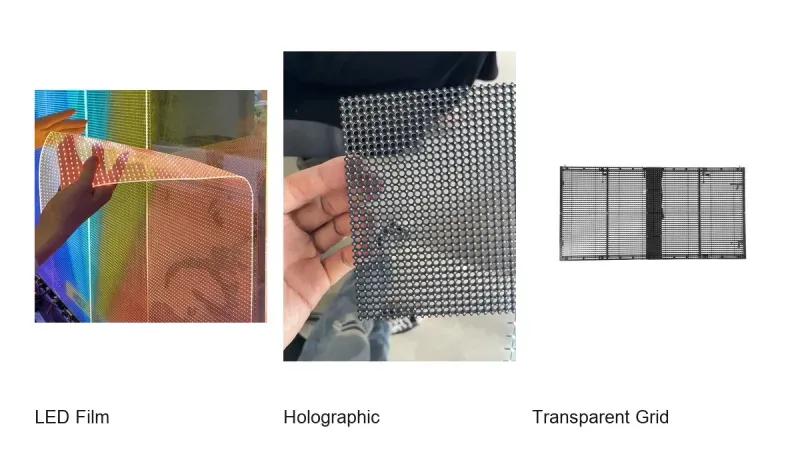
LED Film: indoor glass and curved art installations
LED 필름 suits projects where the display should follow the glass closely and preserve a light, open appearance. Indoor exhibitions, art centres and architectural art installations are useful starting points. The selection is led by the relationship between the image, the glass and the space behind it.
For broad curves, DOIT VISION recommends a minimum curve diameter of 1 m, subject to layout and installation access. Confirm the glass divisions, edge clearances and cable routes before ordering. A curved sample demonstrates flexibility; the final layout still needs to account for every connection and the surface onto which it will be fitted.
Plan the attachment as part of the finished installation. Glass cleaning, alignment and access around the edges affect the result. If the site is a sun-facing shopfront or the brief calls for demanding, long-term fixed operation, start the review with Holographic even when a very discreet appearance is desired. The word “window” alone does not select Film.
Film can be repositioned only shortly after its first application; its adhesive cannot be replaced. Replacement adhesive is available for glass-mounted Holographic. For both, we recommend no more than three reapplications after the first fitting, subject to the condition of the display and adhesive.
Holographic LED: outward-facing glass and demanding fixed displays
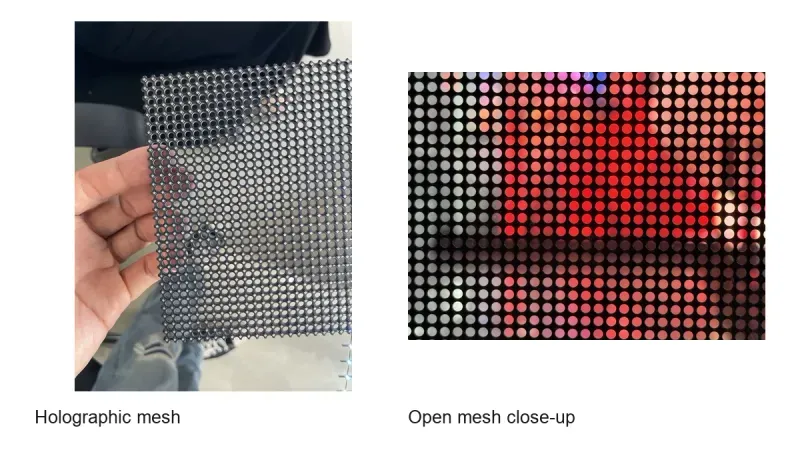
Current DOIT VISION Holographic uses an open mesh carrying surface-mounted LEDs. The openings are visible in the product photograph below. This is the structure to assess when comparing it with a transparent film sheet or a cabinet of LED strips.
이 시리즈는 사용합니다 integrated LED-driver static driving, parallel addressing and individually serviceable LEDs. These features matter when comparing how the display is driven, what happens after an individual LED fault and how much material must be replaced during service. Ask for the proposed configuration and maintenance arrangement alongside the display layout.
Holographic is our recommended first route for outward-facing retail glass, semi-outdoor installations, sun and UV exposure, larger fixed displays and long operating schedules. Confirm brightness at the intended viewing position and define the environmental protection of the complete installation. A glass-mounted screen behind a window and a screen directly exposed to rain require different project details.
The mounting method should follow the glass, support structure and maintenance access. Keep power and data connections reachable. Large screens also need a clear drawing of panel divisions and cable routes so a technician can locate the relevant part without dismantling unrelated sections.
Transparent Grid: a cabinet-based structural option
투명 그리드 uses cabinets with spaced LED strips. Compare it when the layout is built around a supporting frame, hanging arrangement or modular cabinet assembly. The cabinet format changes the supporting structure, visible hardware and service plan compared with a display attached closely to glass.
Confirm the cabinet dimensions against the opening and the approved support design. Check where the power boxes, cables and cabinet edges sit in the viewer’s line of sight. On a glass facade, evaluate the view from inside as well as the displayed image from outside.
Grid is a structural choice rather than a rule that every outdoor project must use Grid. Sun-facing glass and demanding fixed displays should still begin with a Holographic review; compare Grid where its cabinet construction suits the project. Environmental suitability belongs to the specific configuration and installation, not to a generic category name.
Compare mounting, maintenance and quotation scope
Ask each supplier to quote the same screen area, content requirements and site conditions. A comparison based only on display material per square metre can omit the support, controllers, power distribution, cables and service provisions needed to operate it.
| 결정 | LED 필름 | 홀로그램 | 투명 그리드 |
|---|---|---|---|
| 출발점 | Indoor glass integration and curved art | Sun-facing glass and demanding fixed use | Cabinet-based structural layouts |
| 가시적인 구조 | Transparent sheet with LEDs | Open mesh with surface-mounted LEDs | Spaced LED strips within cabinets |
| 설치 확인 | Glass preparation, curve and edge access | Mesh layout, attachment and accessible connections | Support design, cabinet divisions and cable routing |
| 유지보수 점검 | Removal and replacement method for the fitted area | Individual LED service and technician access | Service access and replacement scope for the quoted cabinet |
For an existing glass surface, ask how an affected section would be removed and restored. Holographic can be supplied with replacement adhesive; the condition of a removed section must be checked before reuse. Film placement needs to be planned carefully: its adhesive is not replaceable, and repositioning is limited to the short period after initial fitting. Neither should be specified as a repeatedly removable rental skin.
Compare the quoted service unit, spare parts and access requirements. Avoid assuming a fixed cost ranking between the three families: pitch, area, control equipment, mounting and site work all change the scope.
Choose the route for your site
A street-facing retail window with strong afternoon sun: start with Holographic. Supply the glass orientation, sun exposure, dimensions and daily operating schedule. Review daytime visibility and how the screen will be dimmed for evening use.
An indoor exhibition or art centre with broad curved glass: start with LED Film. Supply the curve diameter, surface drawings and content. Check installation access and the view through the glass with a representative sample.
A large fixed display with difficult service access: start with Holographic and design the maintenance route at the same time as the image layout. Identify how technicians will reach LEDs, connections and power equipment throughout the installation.
An opening designed around modular cabinets or a hanging support: compare Transparent Grid against the structural brief. Confirm the support loads, cabinet arrangement and service side with the project team.
If the site combines these conditions, use the 투명 LED 제품군 to shortlist the structures, then review the complete installation. The useful decision is a product and layout matched to the site, with its connections and service scope included.